Carnatic music books and CD's came in the post yesterday from India! I ordered them online from The Karnatic Music Book Center. It took about two weeks and the package was so amazing that I almost couldn't open it. The materials were double wrapped in plastic, then in cardboard, then inside this white cloth bag that was sewn shut. I'm pretty sure that this package was waterproof!
The air that floated from the sky created the sound "S", which is the origin of Nadam. Along with this sound the akshara "A" considered to be the earliest was added to create the sound "SA".
With SA as the base, the other six swaras RI-GA-MA-PA-DA-NI were created.
Purandara Dasa, sometimes called the father of Carnatic Music, not only composed thousands of Krithis, but also created a set of repetitious practice exercises called "Swaravali", "Alankaras", "Geethams" etc which over time has become the standard lessons for the beginners in Carnatic Music. These exercises are in existence for the last many centuries and are the proven tools for any beginner.
I grew up playing and listening to punk rock, metal, new wave, and other types of rock music before enrolling in a jazz ensemble at a community college at the age of 20. At that time I knew nothing about jazz and had never listened to it. I had just never been exposed to it growing up in my little West Texas town. The reason that I joined the jazz ensemble was that I figured it was the only outlet in music school for a drum set player. I figured that I should start listening to some jazz if I was going to play in a jazz band so I hit the local music stores! Later I found out that my hometown of Amarillo, TX actually had a rich music history with great local players, some of whom I was fortunate to have the opportunity to play with. They became mentors to me.
Without further adieu, here are some Jazz albums that influenced and informed a younger version of myself.
Unknown Jazz Piano Cassette Tape Compilation
A friend gave me a cassette tape that was a compilation of jazz piano greats. The writing was worn off so I never knew who was on it until years later when I heard the tracks on different albums. Included was Chick Corea's "Matrix", Herbie Hancock's "Riot", Duke Ellington w/Max Roach and Charles Mingus "Caravan", a track from Michel Petrucciani, and others. Needless to say, I wore this tape out and these tracks significantly influenced my conception and aesthetic of jazz.
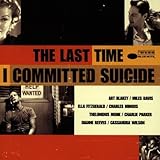
The Last Time I Committed Suicide (Movie Soundtrack)
I don't remember much about the actual movie but this soundtrack was an early introduction to some heavy hitters for me. The first track on the album was Charles Mingus' "Better Git Hit in Your Soul", and the second was a killer take of "Straight, No Chaser" by a piano-less Max Roach quartet. Also on the album were Miles Davis, Thelonius Monk, Ella Fitzgerald, and more!
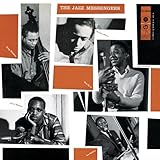
Art Blakey & The Jazz Messengers
I didn't know anything about Art Blakey when I picked this album up. When I first started getting into jazz in my early 20's I would buy any album that looked interesting. All I could tell from the album cover was that the drummer looked awesome. As it turns out, he was awesome and album is a classic! My introduction to Horace Silver and tunes like "Nica's Dream"
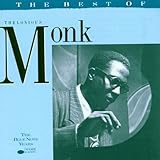
Thelonius Monk - The Best of Thelonius Monk: The Blue Note Years
It's Monk! My favorite track was "In Walked Bud"
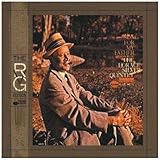
Horace Silver - Song For My Father
The first thing I noticed about this album was the way that space was used and the minimalist chords and modal harmonies that Silver was using. I dug the Latin influence and many of the compositions had a meditative quality to them.
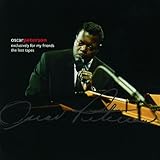
Oscar Peterson - Exclusively For My Friends: Lost Tapes
I probably ran across this album in the clearance bin at the music store. I was absolutely floored by Peterson's playing. Blistering runs, killer harmonies, stride piano, high energy ensemble. Peterson would take tunes to the next level with double time solos accompanied by left hand walking or boogie-woogie bass lines, and of course, his signature octave and block chord solos. Peterson's playing will always inspire and astound me!
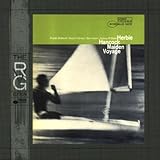
Herbie Hancock - Maiden Voyage
Herbie Hancock, Freddie Hubbard, Tony Williams, and Ron Carter! These guys were a musical factory churning out albums that would be top sellers in their own day and go down in history as Jazz classics. Surprisingly I owned and listened to this album before hearing the Headhunters album.
Guess which album is next on the list...
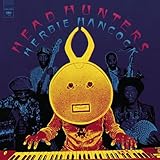
Herbie Hancock - Headhunters
Judge me if you will, but it took me a second to get into this album. I couldn't appreciate the vintage synths upon the first hearing. It sounded dated and almost cheesy to me which was perhaps due in part to me growing up in the 80's, but when Hancock takes off on his Rhodes and Moog solos and Bennie Maupin kills it on the saxophone I knew my initial impressions needed to be reconsidered. To this day Hancock's solo on Chameleon is one of my favorite of all time and this album will always be one of those at the top of my music list. I just recently found a copy on vinyl!
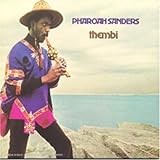
Pharoah Sanders - Thembi
One of my music teachers passed me a copy of this album. I listened to it a lot.
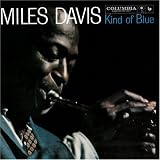
Miles Davis - Kind of Blue
I don't know what to say about this one other than regardless of what type of music you listen to this album should be in your collection. Miles Davis changed the course of music in the 20th century more than a few times and his influence is just as heavy today as it was then and will be felt for at least the next century and most likely beyond.
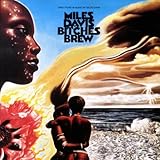
Miles Davis - Bitches Brew
I had a next door neighbor once who had this on vinyl. I asked him if he would be willing to trade another record for it. From my collection he chose a blue colored vinyl copy of Sonic Youth's "Jet Set, White Trash, and No Star" for it. His remark about Bitches Brew was that, "I'm not that into it, there's no melody." I said something along the lines of, "Hmm... well... thanks for the record dude." and went along my way.
There are so many jazz albums that I love and I can only begin to list a few here. The next album on the list is one that I found on cassette tape, also when I was in my early twenties and led me down another musical path that I could never have imagined at the time.
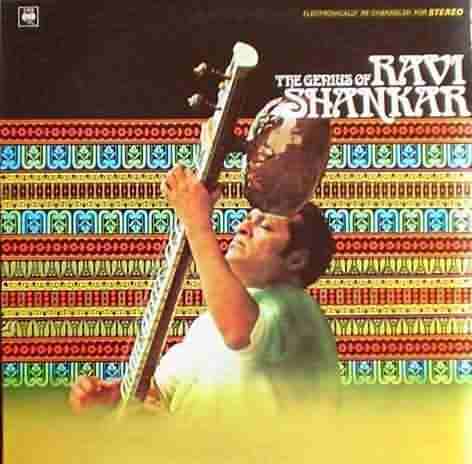
Ravi Shankar - The Genius of Ravi Shankar
This album was my introduction to the music of India. Pandit Ravi Shankar on sitar with Ustad Allah Rakha on tabla. I now have a vinyl copy of this one as well.
Thanks for reading! Comment and share some of your favorite jazz (or otherwise) albums below!
EkTal or Ek Taal is a 12 beat rhythmic cycle used in North Indian Classical music. I recently performed on a concert where I was required to play this taal. I was never taught Ektal by my tabla teacher so I cross referenced a couple of books for the Theka and found this video on YouTube from WorldMusicGuru helpful as well.
My friend Donovan Stokes introduced me to the sounds of Mark Deutsch years ago. The Bazantar is an invention of Deutsch's that is basically an upright bass outfitted with sympathetic and drone strings. Check it out!
"Although several people have written about Indian music recently, there is a continuing need to initiate people, especially if they have not had the opportunity of hearing our music in its proper setting in India.... What I specially like about this book is that it does not go into dogmatic assertions or deal only with the dry, theoretical aspect, but has a much more human approach. This comes out beautifully because of Peggy Holroyde's love for the country, its people, its art forms and many other facets of Indian culture. I knew, when she was in India, what great pains she took in travelling round the country... listening to all kinds of music... experiencing it for herself and collecting information during the five years she was there. I know, also, how much care she has taken in selecting and checking her material for this book, and as a result it reveals the great love she has for the task of trying to help understand the past and present of Indian music, as well as the enduring background of India itself."
"Peggy Holroyde has deep insights into the soul of Hindustani Classical Music of North India. Her book provides an easy read for both the Indian and Western readers interested in getting a flavor of Indian music as lay people." Suresh C. Mathur, Amazon.com review
Today, due to our ability to record and reproduce sound mechanically, we hear a great deal of music. Are we losing the art of listening to it? Do we really benefit from it?
Peter Hamel, born in 1947, studied music, psychology and sociology in Munich and Berlin, after which he spent three extensive periods in Asia studying Eastern traditions of music.
Now a practising composer and musician, he has become convinced that through encounter with the ancient and unspoilt non-European disciplines it is possible to re-discover the natural laws and the magical powers of sound. In this practically-based book, he discusses the effects on the human psyche of Indian, Tibetan, Arabian and other Far Eastern techniques of vocal and instrumental improvisation, especially in the religious context.
Relating the exoteric sound lore of these traditions with the rational Western tradition and its modern research into harmonics, the conformity of the harmonic series to natural law is seen as pertaining on the one hand to the level of mystical experience and on the other to scientifically demonstrable psychological effects.
We therefore have the ability of chant, rhythm and melodic patterns to invoke the deeper levels of experience which transcend our subjective self-concern; at the same time these effects need not be arbitrary and accidental. Through experiment with sound, even those without musical training can awaken to a new consciousness of its powers and derive renewed strength for everyday living.
There are sections dealing with modern group music, psychedelic music and drugs, mantra, relationship of vowels to parts of the body, meditation, music therapy, breath and voice, singing and "one's own sound".
This is a book for those who suspect that music is more than entertainment or an obligatory cultural activity and who with to explore its powers as a tool for self-development."
Indian Classical Music
As a student and lover of the Classical music of India, I especially appreciate Hamel's section of the book devoted to this beautiful musical tradition. Topic covered in this chapter include the concepts of raga, rasa, tala, Indian music studies, Nada Yoga, and a "Singing Sahdu on the Ganges"
Below are some of the artists mentioned in the book.
Ravi Shankar
Sitarist Ravi Shankar performing with Allah Rakha on tabla at the Monterey Pop Festival in California, 1967. Shankar's performance lasted 4 hours and played a major role in the introduction of Indian Classical music to the West. The festival also included performances by Jimi Hendrix, The Who, Janice Joplin, Otis Redding.
Vilayat Khan
Abdul Karim Khan
Teacher of the "Singing Sadhu on the Ganges".
Hamel tells the story of meeting an ascetic musician on his way to see the Indian holy woman Ananda Mayi Ma. This sadhu lives in a tent on the edge of the Ganges river who teaches him singing and Nada Yoga.
From wikipedia:
"Nāda yoga is an ancient Indian metaphysical system. It is both a philosophical system , a medicine, and- as the name suggests- a form of yoga. The system's theoretical and practical aspects are based on the premise that the entire cosmos and all that exists in the cosmos, including human beings, consists of sound vibrations, called nāda. This concept holds that it is the sound energy in motion rather than of matter and particles which form the building blocks of the cosmos."
Hamel cites Ravi Shankar from "My Music, My Life"
"These great musicians were not just singers or performers, but also great yogis, whose minds had complete control of their bodies. They knew all the secrets of Tantra, hatha yoga, and different forms of occult power, and they were pure, ascetic and saintly persons. That has been the wonderful tradition of our music -- and even today, though such miracles may not be performed, one can see the immense impact on the listener and, as many put it, the 'spiritual experience' the listener feels."
He finds out later that this man was a disciple of the great singer Abdul Karim Khan. At his death in 1937 Khan was reckoned to be India's last great musical genius and singer.
Subbalakshmi
In his book Hamel briefly mentions the Karnatic South Indian vocalist named Subbulakshmi who I had never heard of. I was delighted to find that recordings of her have been uploaded to YouTube.
"Periodic Music" and "Minimal Music"
Terry Riley
Steve Reich's "Drumming"
Finding Your Sa
One of my favorite parts of the book was a section about finding your "Sa". Sa is the tonic note in Indian music and every singer finds their own Sa based on their particular voice.
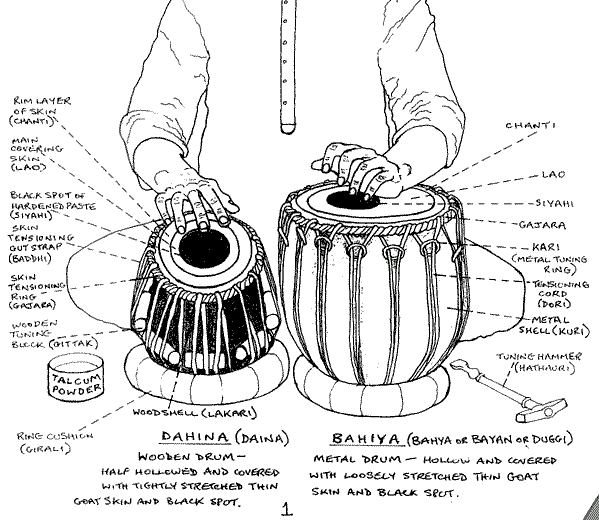
This blog post is intended to be a collection of resources for fellow students of tabla. There is no substitute for lessons with a knowledgeable teacher but these resources can serve an introductory purpose for beginners and as "continuing education" for more advanced players.